

Open letter to the government – Opinion piece
With the support of Matthieu Orphelin, Member of Parliament, and Francois-Michel Lambert, Member of Parliament and President of the Institute for Circular Economy
Opinion piece published in Usine Nouvelle:https://www.usinenouvelle.com/editorial/avis-d-expert-lettre-ouverte-au-gouvernement-pour-creer-700-000-emplois-donner-sa-chance-au-reemploi.N964451
"A new life of quality!" That is everyone's wish as we imagine life after COVID-19. This new world must enable a transformation of production and consumption models towards sustainability and circularity.
Currently, at the local, regional, French, and European levels, all political and economic decision-makers agree on setting ambitious environmental goals. This is the case with the French law on waste reduction and the circular economy (LAGEC) and theEuropean Green Deal, which herald this new world. However, it is necessary to give ourselves the means to achieve our ambitions.
We, as players in the reuse and repair sector, are working to develop a virtuous model on three levels: economic, social, and environmental. But we could go further: the reuse market in France could triple in three years, reaching €300 billion, and direct jobs could increase sevenfold, employing more than 700,000 workers.
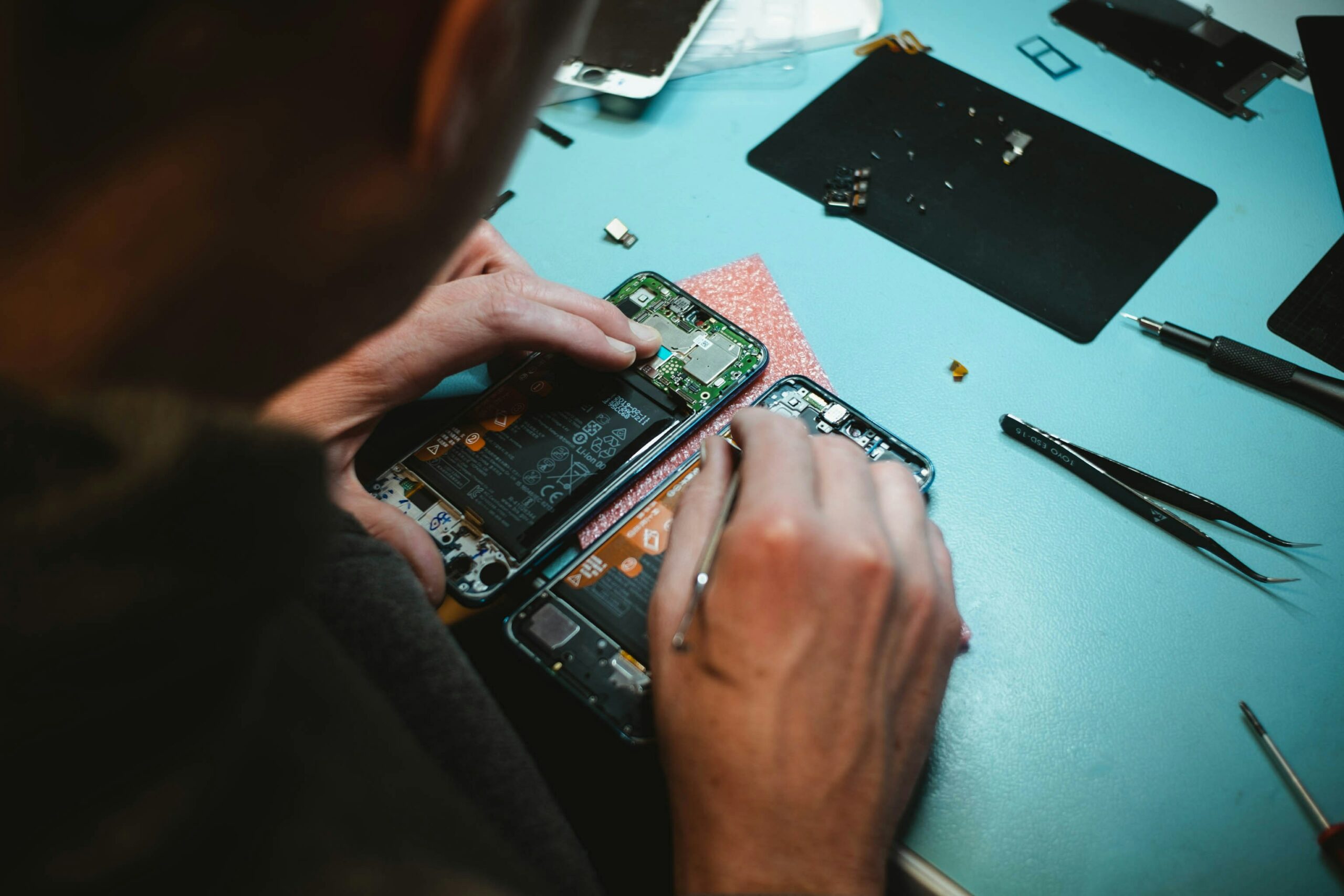
For example, 113 million cell phones lie unused in French people's drawers, representing more than €20 billion in unused resources. There is no need to go to the other side of the world to buy new products; we just need to repair or recondition the ones we already have!
In addition, this would represent more than 3.60 billion kg [Erratum] ofCO2equivalent avoided. But the possibilities for reuse extend to many other sectors involving consumers, professionals, and manufacturers alike: construction, gardening and DIY, textiles, fashion, sports, toys, automobiles, electronic banking, and catering equipment.
An ecological and circular world must be built together. The raw materials, talent, and expertise are there; it is up to us to unlock this potential, but we need your help. We ask that at least three conditions be met in order to relocate jobs to France and create a truly local circular economy:
Firstly, the second-hand market must respect fair and healthy competition to avoid any distortion of competition with new products, but also between non-European reconditioned products and the waste sector. This distortion is mainly introduced by the current functioning of most marketplaces, which unwittingly become a Trojan horse for practices and products that do not comply with regulations, mainly tax regulations, with discount services and a tendency to drive prices down, where only certain players, mainly Asian, are able to sell.
Secondly, we call for increased public and private investment in the sector and for a overhaul of sector governance so that all players involved in reuse—particularly those in the commercial sector—participate in the management of flows, eco-organizations, and funds created by LAGEC. The law stipulates that the reuse fund should be financed by 5% of eco-contributions. Given the environmental challenges we face, this seems very little to support the sector. We estimate that a fund of €500 million is needed to invest in the sector (industrial units, R&D, training, public awareness campaigns, etc.).
Thirdly, strictly comply with and enforce the "legal hierarchy for the management of used goods" as established by law, promoting reuse and supplying the second-life sector with equipment and materials. This hierarchy must now be reflected in real life! The bonus/penalty system introduced by the LAGEC is a first step, but others seem necessary: real access to resource pools managed by eco-organizations (which currently account for between 2 and 5% of actual reuse across all their flows), reduced VAT rates, quotas for public purchases of reconditioned products, etc. These benefits could be conditional on controls and obtaining recognition such as the "Refurbished Product Label."
Our fellow citizens are increasingly basing their purchasing decisions on environmental and social criteria. Economic reality must respond to these aspirations, and the cost of repairing a product should not exceed 30% of the price of a new product. These are just some of the actions that could transform industries and give products a high-quality second life! For our products, our planet, and for all of us!
Author: Benoit Varin, Co-founder of Recommerce and President of RCube
With (Co-editors):
Christophe BATARDIERE (President of Espace Emeraude Group), Thierry Boucard (President and Founder of Exatec Group), Darani Sivathasan (Co-founder of Phone 2000, GSM MASTER), Bastien Rambaud (Co-founder of Vesto), Kamera Vesic (Co-founder of PikpikEnvironnement), Benjamin Burel (Co-founder of PSM Lorient), Adrien Montagut (Commown), Philippe Correia (Co-founder of Segundo), Mohamed Sefane (President and Co-founder of Les Artisans du Mobile), Renaud Attal (President of Co-Recyclage), Shu Zhang (President of Pandobac), Pierre-Etienne Roinat (President and Co-founder of Recommerce), Stanislas Lebas (President of Access Recycle), Gautier Feld (President of DOKIT), Emmanuel Morel (Co-founder and Director of Articonnex), Peter Nassa (Co-founder of Média Destock), Hélène de La Moureyre (Founding President, Bilum), Cédric Madianga (Trainer and Managing Director, eRepair Academy), Christophe Deuil (President, Zéro Impact), Stéphane Brault-Scaillet (Co-founder & CEO, Reparcar.fr), Lorraine Le Baud, Jérémy Tessier (President, Nippe)
And with the support of:
Matthieu Orphelin (Member of Parliament), François-Michel Lambert (Member of Parliament and President of the Institute for Circular Economy), Fabrice Bonnifet (President of C3D), Alma Dufour (Project Manager at Friends of the Earth), Jean-Christophe Chaussat (President of the Responsible Digital Institute), Fabrice Flipo (Lecturer and Researcher at the Institut Mines Télécom), Julien Achour (Leader of Seconde Vie Décathlon), Mathieu Cornieti (President of IMPACT Partners), Olivier de Trémaudan (President of Alter Aequo), Frédéric Bordage (President, GreenIT.fr), Françoise Berthoud (President, EcoInfo, CNRS), Christian Makaya (Head of Development, ECAM-EPMI), Julien Coulon, Antoine Jeanjean, Nicolas HENNON, (Leader, People & Planet Boulanger), Bertrand de Talhouët (CEO, Creadev)